Way Cool Plumbing & Air
← Blog·HVAC·

Monsoon Season and Your AC: Power Surges, Roof Units, and What to Watch

Monsoon storms threaten Phoenix ACs three ways: power surges, dust-clogged coils, and water intrusion into roof and ground units. Here's what goes wrong and the cheap steps that prevent an emergency.

Monsoon Season and Your AC: Power Surges, Roof Units, and What to Watch

QUICK ANSWER

Monsoon storms threaten Phoenix air conditioners in three main ways: power surges from lightning and grid flicker that damage the control board and capacitor, wind-driven dust and debris that clog the outdoor coil, and water intrusion into rooftop and ground units. The cheapest protection is a whole-home surge protector, a clear coil, and a tune-up before peak storm season — not a repair call after the unit quits at 115 degrees.

Phoenix monsoon season officially runs June 15 through September 30, and your air conditioner draws the short straw the entire time. It has to keep a house cool through the hottest, most humid stretch of the year while shrugging off dust walls, lightning, and the kind of rain that shows up for eleven minutes and leaves an inch of water behind. Most AC failures we see in August and September are not random. They trace back to something the storm did — and most of them were preventable.

What does a monsoon storm actually do to an AC?

Three things, in rough order of how often we see them. First, electrical: a nearby lightning strike or a grid surge when power flickers back on can spike voltage through your system and fry the control board, the capacitor, or the contactor — the small, cheap parts that make the expensive parts run. Second, airflow: monsoon winds drive fine dust and debris straight into the outdoor condenser coil, and a caked coil cannot shed heat, so the system runs longer, hotter, and less efficiently. Third, water: blowing rain finds its way into rooftop units and ground units that were not sealed or sloped correctly, and standing water plus electrical components is never a good combination.

Why Phoenix homes get hit harder

Mild-climate advice about summer storms mostly ignores the two things that define cooling here: rooftop package units and attic-mounted equipment. A rooftop unit takes the full force of wind, dust, and rain with nothing between it and the sky. Attic ductwork and air handlers sit in a space that can hit 140 degrees, so any storm-related airflow problem gets amplified by heat the rest of the country never deals with. Add a grid that is pulling maximum load during a heat wave — right when a storm knocks a line down and brings it back with a jolt — and you have the exact recipe for an August control-board failure.

The power surge problem nobody budgets for

A capacitor is a part smaller than a soda can. A control board is a circuit board you could hold in one hand. Neither is expensive on its own. But when a surge takes one out, your entire cooling system stops making cold air, usually on the hottest afternoon of the week, usually when every HVAC company in the valley is already booked. A whole-home surge protector installed at the panel costs a fraction of a single emergency board replacement, and it protects the AC, the pool equipment, and the refrigerator at the same time. It is the rare upgrade that is boring, cheap, and genuinely worth it.

What you can do yourself before the next storm

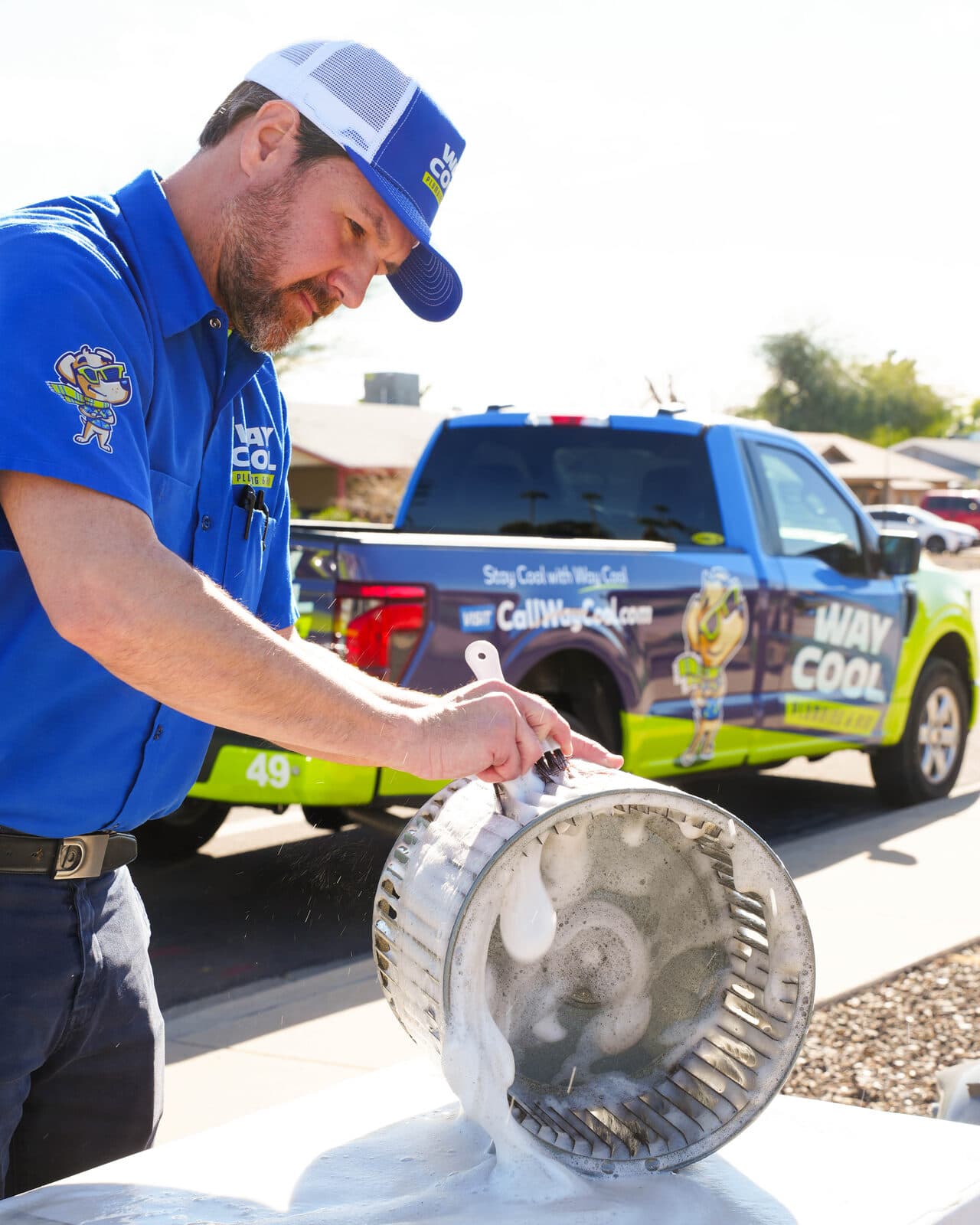
You do not need tools for most of this. Gently rinse the outdoor coil with a garden hose (power off first, spray from the inside out if you can reach it) to clear dust buildup. Keep the area around the outdoor unit clear of loose debris that wind can throw into it. After a storm, glance at the unit — if it tripped a breaker, reset it once, but if it trips again, stop and call, because a repeating trip means something downstream is asking for it. And if the system goes quiet during a storm and will not restart, resist the urge to keep flipping it on. A system that is straining against a failed part will only damage itself further trying.

When it's worth a call

If your AC quits during or right after a storm, if you smell something electrical near the unit, if the outdoor fan will not spin, or if the breaker keeps tripping, that is a real service call, not a wait-and-see. Before peak storm season, a straightforward AC tune-up catches a weak capacitor or a marginal contactor while it is still a scheduled visit instead of a 115-degree emergency. And if your rooftop or attic system has a history of storm-season trouble, our HVAC team can tell you whether it is the unit or the install.

Frequently Asked Questions

Can a power surge really damage my air conditioner?

Yes. Lightning strikes and grid surges — common when power drops and restores during a monsoon storm — can spike voltage into the system and damage the control board, capacitor, or contactor. These are inexpensive parts, but a failure usually stops the whole system and lands you in the emergency-repair queue during the busiest week of the year. A whole-home surge protector at the electrical panel is the simplest defense.
Should I cover or turn off my AC during a monsoon storm?

You do not need to cover it — outdoor units are built for weather. If a severe storm with heavy lightning is directly overhead and you are concerned about surges, switching the system off at the thermostat for the worst of it is reasonable, especially if you do not have surge protection. Turn it back on once the storm passes. Never wrap or seal a running unit; it needs airflow.

Why does my AC struggle more after a dust storm?

Monsoon winds drive fine dust into the outdoor condenser coil. A coated coil cannot release heat efficiently, so the system runs longer and cools less. A gentle hose rinse of the coil (power off) often restores performance. If it still struggles after cleaning, the storm may have stressed a component that is now on its way out.

My AC quit right after a storm and won't turn back on. What now?

First, check whether a breaker tripped and reset it once. If it holds, you may be fine. If it trips again, or the outdoor fan will not spin, or you notice an electrical smell, stop and call — repeated tripping means a part downstream has failed, and forcing the system on can turn a small repair into a large one.

Is surge protection worth it for a Phoenix home?

For most homes, yes. Phoenix combines frequent monsoon lightning, a grid under peak summer load, and expensive rooftop equipment. A whole-home surge protector costs a fraction of a single storm-related board or compressor replacement and protects your other major appliances at the same time.

Before the next haboob rolls in, schedule a Way Cool AC tune-up or ask about whole-home surge protection — call (623) 250-6492.

Got more questionsOr Want a Quote?

Schedule online or call. $89 service call, waived with any approved repair.

Call (623) 250-6492
CALL