Way Cool Plumbing & Air
← Blog·HVAC·

How Phoenix Homeowners Can Spot an AC Drain Line Clog Before the Ceiling Damage

Your AC's drain line is the single most common cause of indoor water damage on a Phoenix home. Here's what to watch for, what causes it, and how to stop the leak before it ruins drywall.

How Phoenix Homeowners Can Spot an AC Drain Line Clog Before the Ceiling Damage

If your air conditioner is running but you're seeing water stains on the ceiling, a damp patch on the wall around the air handler closet, or a musty smell near the indoor unit — there's a 90% chance the cause is a clogged AC condensate drain line. It's one of the most preventable problems in Phoenix HVAC, and one of the most expensive to ignore.

What is the AC drain line and what does it do?

Your AC produces condensate as it pulls humidity out of the indoor air. That water collects in a pan under the evaporator coil and drains out of the home through a PVC pipe — the condensate drain line. A typical Phoenix home produces 5–20 gallons of condensate a day during peak summer cooling.


Why do drain lines clog so often in Phoenix?

Three reasons: algae and biofilm growth in the warm, dark, humid drain line; fine dust that settles on the coil and washes down with condensate; and slope issues from settling slab homes that let standing water sit in the line. Phoenix runs AC 6+ months a year, so the buildup happens faster than in milder climates.

What are the warning signs of a clogged drain line?

Water spots forming on the ceiling below or around an attic-mounted air handler; damp drywall or visible water around an indoor unit closet; a musty smell near the unit; the air handler making gurgling sounds during operation; or the system shutting off mid-cycle (modern systems have a float switch that kills the unit when the pan fills).

What happens if I ignore it?

Water keeps accumulating in the pan until it overflows. In an attic system, that means water dripping through the ceiling — typically $1,500–$5,000 in drywall, paint, and insulation damage if it goes on for a few days. In a closet system, the floor and adjacent walls take the damage. Insurance often covers it but the deductible and rate hike usually outweigh the fix.

Can I clear the drain line myself?

For a fresh clog, sometimes yes. Attach a wet/dry shop vac to the outdoor end of the drain line (usually visible coming out of an exterior wall) and pull suction for 60 seconds. If water flows out after, you cleared it. If nothing comes out, or if water still pools at the unit, call us — the clog may be deeper or the line may have slope problems that vacuuming won't fix.

What does a full drain line clearing involve?

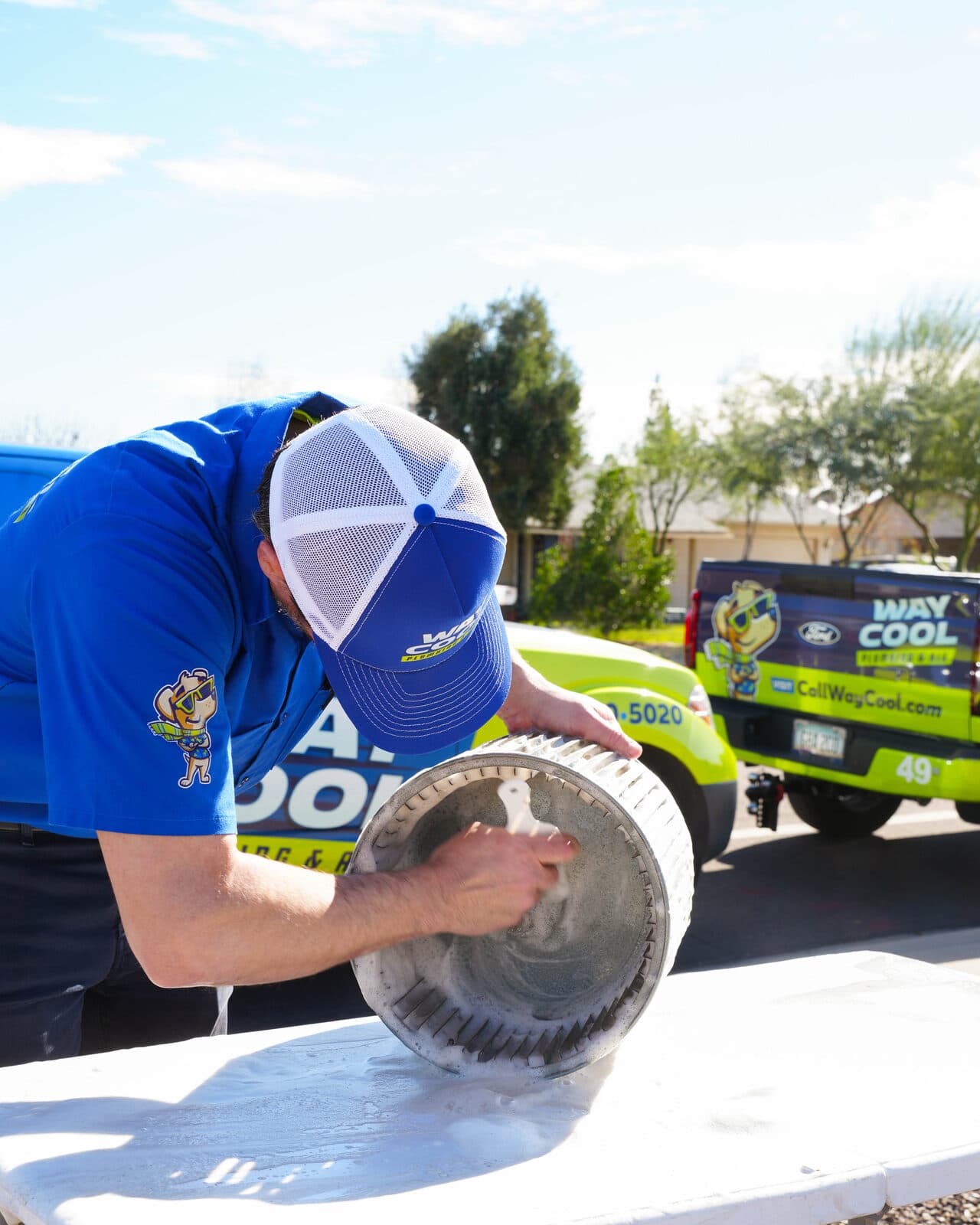
We pull from both ends of the line, treat the line with a brush and an enzyme cleaner, verify flow with a flow test, and inspect the drain pan and float switch for damage. On Basic Bones Plan visits, this is included on every Spring and Fall HVAC visit — at no extra charge. Pricing on standalone clearings depends on access; your comfort advisor will quote it before any work starts.

How can I prevent future clogs?

Annual flushing (or twice-annual for older systems), keeping a clean air filter so less dust reaches the coil, and a yearly enzyme tablet drop in the drain pan. The Basic Bones Plan includes drain line clearing on every HVAC visit — three times a year — which is why members rarely see this problem.

Drain line clogs are the kind of failure that's cheap to prevent and expensive to ignore. If you're seeing any of the warning signs above, get it checked before it becomes a ceiling repair. Schedule online or call (623) 250-6492.

Got more questionsOr Want a Quote?

Schedule online or call. $89 service call, waived with any approved repair.

Call (623) 250-6492
CALL